How to Search Flights Not Listed on Mainstream OTAs (2026)

TL;DR
Mainstream OTAs like Expedia, Google Flights, and Kayak only show published fares from airlines that participate in their distribution networks. Entire carriers (Southwest, Ryanair, many Asian budget airlines) are invisible on these platforms, and so are consolidator fares negotiated privately between agencies and airlines. To find what OTAs miss, you need a combination of direct airline searches, consolidator agents, power tools like ITA Matrix, deal-alert subscriptions, and creative routing platforms. This guide covers nine specific methods, ranked by effort and savings potential.
Why OTAs Don’t Show You Everything
Before jumping into the methods, it helps to understand why searching for flights that aren’t listed on mainstream OTAs is even necessary in the first place. The answer comes down to how airline distribution actually works.
Airlines sell their seats through a chain: airline inventory flows into a Global Distribution System (GDS), then OTAs pull from that GDS to display results. But not every airline participates in every GDS, and not every fare gets published into any GDS at all. There are two distinct gaps:
Missing airlines. Some carriers opt out of third-party distribution entirely. They want to control the booking experience and avoid paying commission fees. Southwest is the most famous example in the U.S., but dozens of low-cost carriers worldwide do the same thing.
Missing fares. Even when an airline does appear on OTAs, it may offer separate, lower-priced fares through consolidator agreements with travel agencies. These unpublished fares are negotiated in bulk and never surface on public search engines.
If you only search OTAs, you’re seeing a curated slice of the market, not the whole thing.
At-a-Glance Comparison: 9 Off-OTA Flight Search Methods
| Method | Cost | Best For | Savings Potential | Effort | Key Risk |
|---|---|---|---|---|---|
| Airline Direct Sites | Free | Budget carriers, regional routes | Moderate | Low | One airline at a time |
| Consolidator/Concierge Agent | Zero booking fees* | Intl long-haul, premium cabins | $200–$1,000+ | Low | Prices dynamic until ticketed |
| ITA Matrix | Free | Complex itineraries, fare research | Moderate | High | Can’t book directly |
| Skiplagged (Hidden-City) | Free | Domestic one-way, carry-on only | 20–60% | Medium | Airline policy violations |
| Kiwi.com (Virtual Interlining) | Free to search | Multi-city budget travel | High | Medium | Poor support during disruptions |
| Hopper Secret Fares | Free app | Flexible international travel | Up to 35% | Low | Mobile-only, limited routes |
| Deal-Alert Services | Free–$199/yr | Flexible leisure travelers | 40–90% | Low (passive) | Deals often from major hubs only |
| Forum Monitoring | Free | Expert travelers, error fares | Variable | High | Deals vanish within hours |
| VPN/Point-of-Sale Tricks | Free–$10/mo | International bookings | Variable | Medium | Ethically gray, may violate TOS |
*PixelPath Travels positions zero booking fees and transparent pricing per their service model.
1. Book Direct with Airlines That Skip OTAs
Best for: Budget domestic flights (Southwest), European budget travel (Ryanair), and routes served by smaller regional carriers.
This is the simplest method and the one most travelers overlook. Not all airlines appear on all search engines. Southwest Airlines, one of the largest domestic carriers in the U.S., does not allow its fares on Google Flights or any third-party platform. Ryanair in Europe operates similarly. Several Asian carriers, including some flights from Air China and Thai Airways, show only partial schedules on OTAs, while airlines like Aeroméxico and EVA Air list only a fraction of their inventory.
Why airlines do this: They want you on their website, where they control the experience and can sell you add-ons (bags, seat selection, priority boarding) without sharing revenue with intermediaries.
What to do:
- For any domestic U.S. route, always check Southwest.com separately.
- For European trips, search Ryanair and Wizz Air directly.
- For routes to India, carriers like IndiGo, SpiceJet, Akasa Air, and Air India Express often have limited OTA distribution in the U.S. Check their sites or work with an agent who specializes in those airlines.
- For any route, identify which carriers serve it (Wikipedia’s airline route lists are surprisingly good for this), then check each carrier’s site.
Limitations:
- Tedious if you’re comparing many airlines.
- No single dashboard to compare prices across direct-only carriers.
- You won’t find consolidator or negotiated fares on airline websites either.
2. Use a Consolidator or Flight Concierge Service
Best for: International long-haul travel, premium cabins (business and first class), multi-city itineraries, and USA-to-India routes.
This is the method with the highest savings ceiling and the one that most “how to search for flights not on mainstream OTAs” guides either skip or explain poorly. Consolidator fares are special net rates that airlines negotiate with select travel agencies in bulk. They’re not filed in any GDS for public consumption, so Google Flights literally cannot show them.
A FlyerTalk community member explained it well: consolidator fares “do not exist on all routes and rarely are published/public fares. Typically they are offered where an airline sells a block of seats to a travel agency and then they are reselling them.”
One poster on the Rick Steves Travel Forum reported saving “$200–$300 per ticket by using the consolidator. To me that’s worth a few minutes extra work on my part to double check on things.”
How it works in practice:
- You submit your route, dates, and cabin preference to the agent.
- They search consolidator inventory across multiple airlines.
- You receive a quote comparing their fare to published prices.
- If you proceed, the agent issues the ticket.
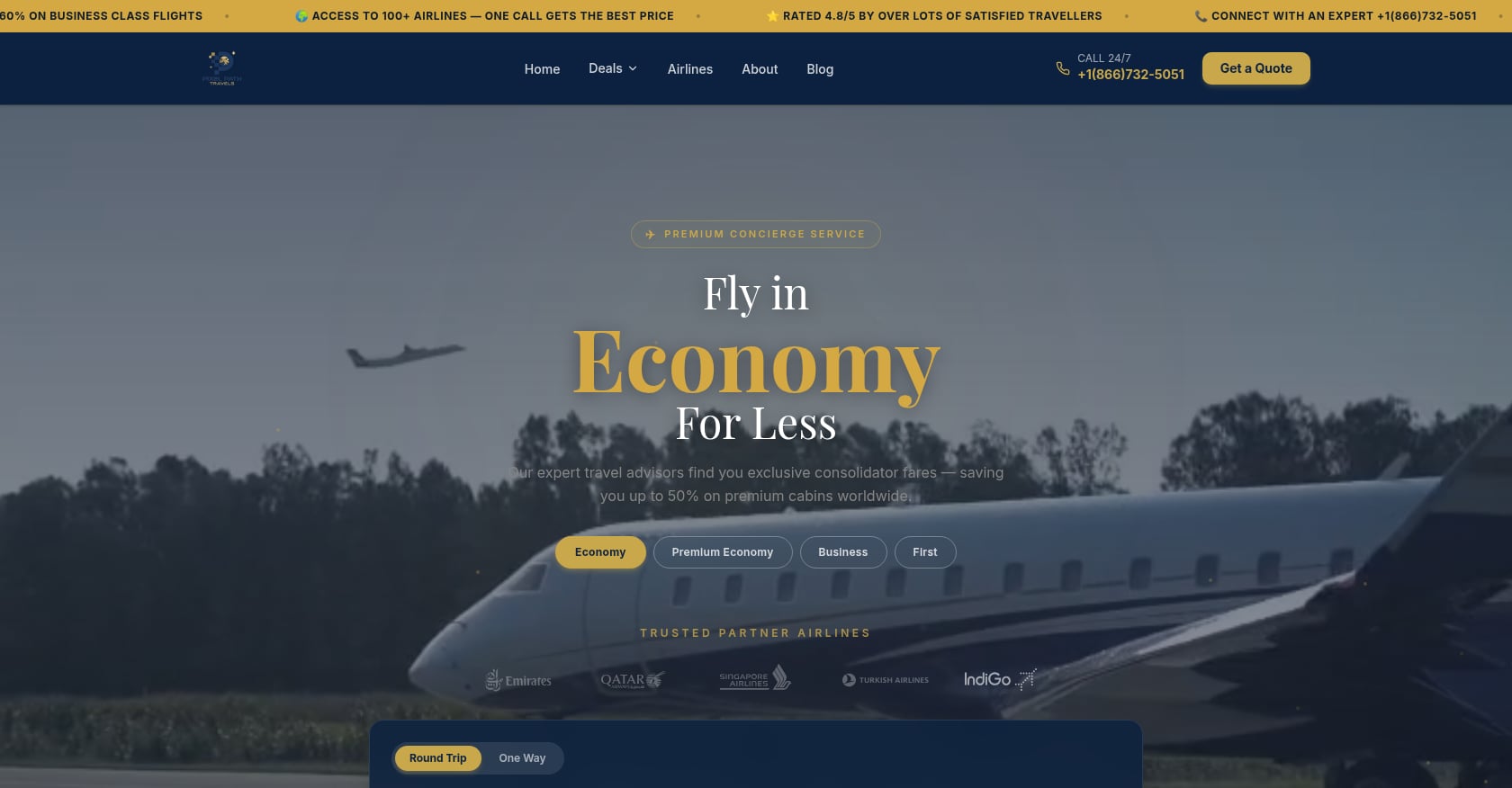
PixelPath Travels operates this way: human advisors source consolidator fares (no bots, no algorithms) and deliver a quote within approximately two hours, with 24/7 advisor access and zero booking fees. As an example, their sample deals page shows JFK to London Heathrow in business class at $2,625 versus $3,570 published, and LAX to Dubai at $3,510 versus $5,040 published.
→ Browse current consolidator fare examples
Important tradeoffs:
- Consolidator tickets sometimes carry restrictions on changes, cancellations, or mileage earning. Always ask about fare rules before booking.
- Savings aren’t guaranteed on every route. As one industry analysis noted, “often, the online deals may match or even beat agent pricing. That’s why comparing both options is essential.”
- Fares are dynamic and not locked until the ticket is actually issued (the PNR is generated).
When this beats DIY searching: Complex multi-city itineraries, premium cabin bookings where published fares are $3,000+, and routes to India where the fare timing matters significantly.
3. Mine ITA Matrix for Hidden Routings
Best for: Power users who want to research every possible routing, fare class, and connection before committing to a booking method.
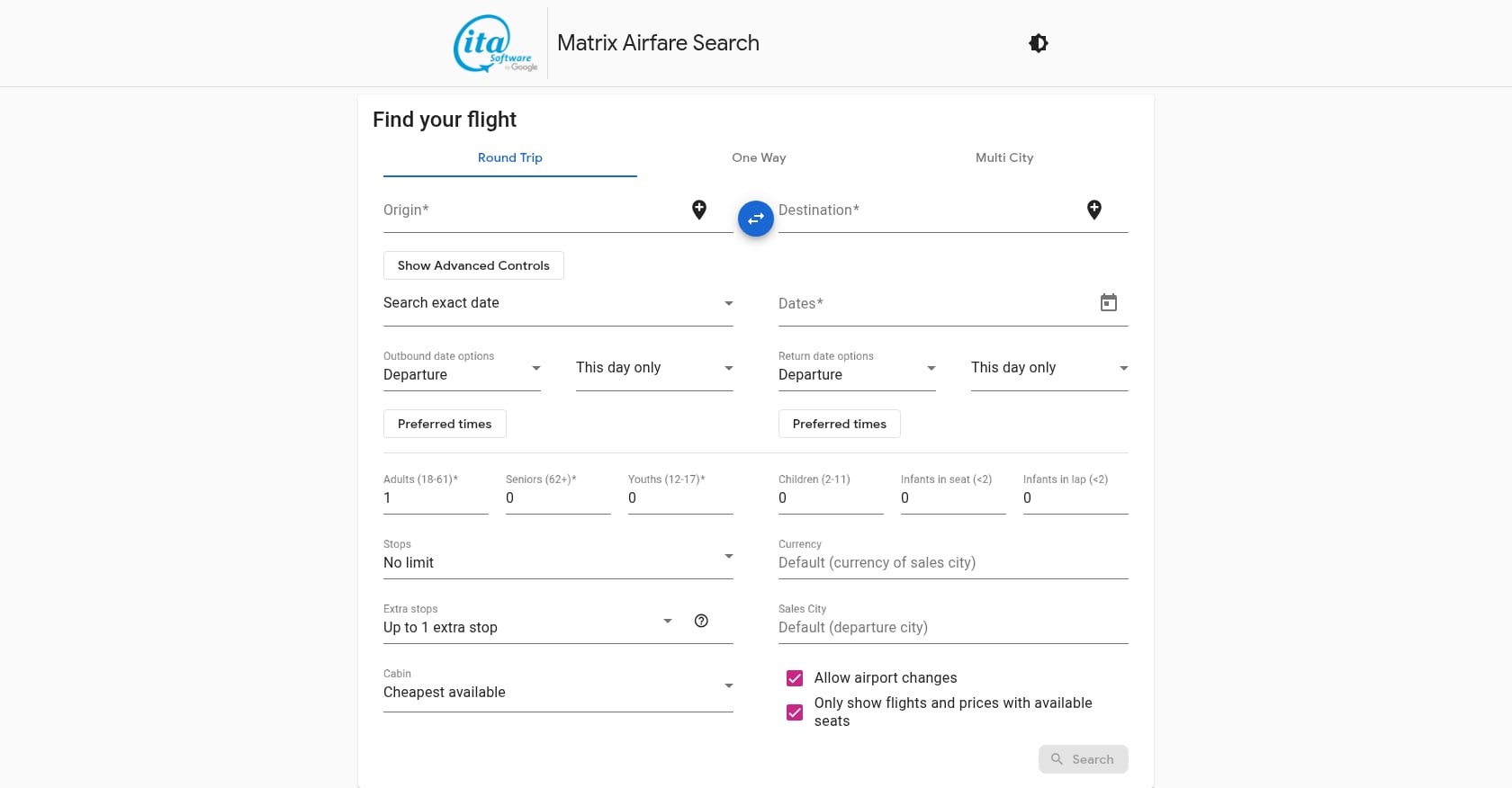
ITA Matrix is Google’s own fare search engine, and it’s far more capable than Google Flights. It can find and price fares on nearly every airline, display detailed fare rules, and let you specify routing codes, alliance preferences, and cabin mixes. Many mileage professionals and travel agents use ITA as their primary research tool.
Key features:
- Advanced routing codes let you force or exclude specific connections.
- Calendar view shows the cheapest dates across an entire month.
- Fare class details reveal exactly which booking code you’d fly, which matters for mileage earning and upgrade eligibility.
- Multi-city itineraries with different carriers on each leg.
The catch: You cannot book directly through ITA Matrix. It’s a research-only tool. Once you find an itinerary, you need to recreate it on the airline’s site, an OTA, or hand the fare and booking codes to a travel agent who can match it.
This is actually one of the strongest use cases for pairing ITA Matrix with a personalized travel advisor. You do the research, find your ideal routing, and let the agent check whether a consolidator fare exists for that same itinerary.
Limitations:
- Steep learning curve. The interface is functional, not friendly.
- No Southwest, Ryanair, or other direct-only carriers.
- Doesn’t show consolidator or unpublished fares.
4. Try Skiplagged for Hidden-City Fares
Best for: One-way domestic travelers with carry-on luggage only who understand and accept the risks.
Hidden-city ticketing means booking a flight with a connection, then deplaning at the layover city instead of continuing to the final destination. Skiplagged’s algorithm specifically searches for these pricing anomalies, where a connecting itinerary costs less than a direct flight to the same layover city.
The savings can be substantial. Some analyses peg hidden-city savings at 20 to 60 percent when the conditions are right.
Critical rules:
- Never check a bag. It will fly to the ticketed final destination, not your actual one.
- Never use your frequent flyer number. Airlines track hidden-city patterns and may penalize your loyalty account.
- Only book one-way. If you skip a leg, the airline cancels all remaining segments.
- Know the airline’s position. United Airlines specifically prohibits hidden-city ticketing in its Contract of Carriage and has taken legal action over it.
Community reality check: Practitioners on Reddit report that hidden-city ticketing requires more trip management overhead. One analysis found users “spend 17.3 minutes per trip managing itinerary instability versus 2.1 minutes using conventional search.” If your flight gets rerouted or a connection changes, you may end up somewhere you didn’t plan.
Limitations:
- Doesn’t work for round trips.
- No checked luggage.
- Airlines actively try to close these pricing gaps.
- Risky for international flights where immigration expects you at your ticketed destination.
5. Explore Virtual Interlining on Kiwi.com
Best for: Budget adventurers comfortable self-transferring between carriers, especially on multi-city trips.
Virtual interlining means combining flights from different airlines that have no partnership or interline agreement into a single itinerary. Kiwi.com pioneered this approach and also mixes in trains and buses to create routings that no traditional search engine can match.
The platform opens up routes and price points that simply don’t exist in conventional flight searches because it’s not limited to airline alliance partnerships or codeshare agreements.
What you get:
- Multi-carrier itineraries at prices often 30 to 50 percent lower than single-airline options.
- The option to add Kiwi’s “Guarantee” protection (roughly $15 to $50) that covers rebooking if you miss a connection due to a delay.
- Creative routings mixing budget carriers across regions.
What you give up:
- If a flight is delayed and you miss your next one, you’re on your own unless you bought the Guarantee. And even then, coverage has limits.
- Checked bags won’t transfer between carriers. You’ll need to collect, re-check, and possibly clear security again.
- A Substack commenter warned: “I had a dreadful booking experience with them. If something goes wrong with your flight that is their fault, they refuse to take responsibility… their customer support was non-existent.”
Practitioners on travel forums consistently say the same thing: Kiwi works great when everything goes right. When it doesn’t, you’re in trouble.
Limitations:
- Self-transfer requires sufficient connection time (3+ hours recommended).
- Carry-on only for maximum reliability.
- Customer support has a poor reputation across review sites.
6. Unlock Mobile-Only Secret Fares via Hopper
Best for: Flexible international travelers who don’t mind booking on a phone.
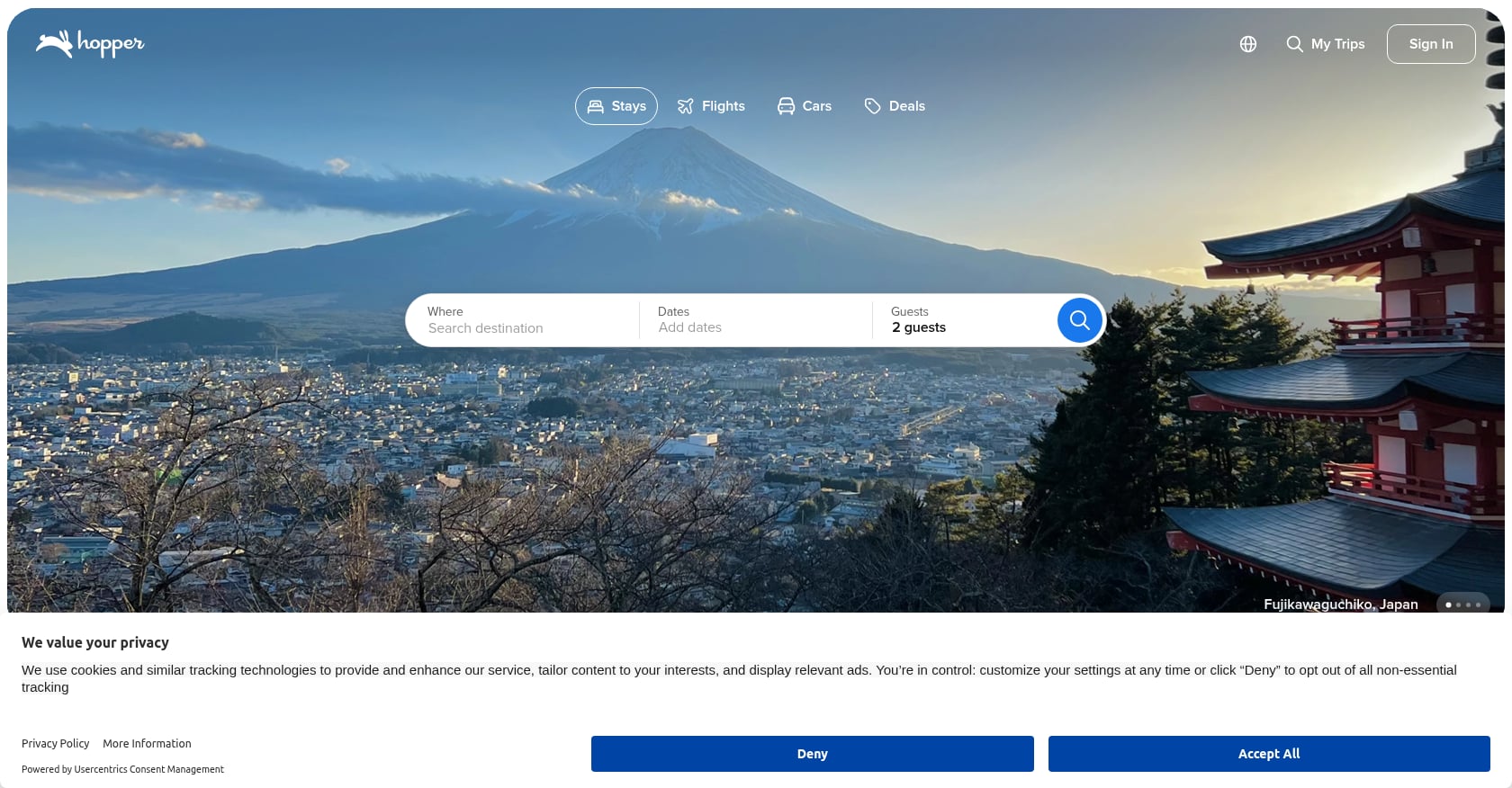
Hopper negotiates exclusive “secret fares” with airlines like Air Canada and WestJet at discounts of up to 35 percent. These fares only appear in the Hopper app and won’t show up on any desktop search or competing OTA.
Airlines view this as a complementary distribution channel. As Hopper’s head of growth explained, “Being a mobile-only, closed environment puts Hopper in an extremely unique position.” The closed ecosystem lets airlines offer lower prices without triggering public price-matching on their own websites.
What to do:
- Download the Hopper app and enable price alerts for your routes.
- Look for fares tagged as “secret” or “exclusive.”
- Compare against Google Flights and airline direct prices.
Limitations:
- Secret fares aren’t available on all routes or all dates.
- Mobile-only booking can feel clunky for complex itineraries.
- Hopper’s price prediction feature (telling you to wait or buy) has mixed reviews for accuracy.
- No consolidator or unpublished fares, just app-exclusive published fares.
7. Subscribe to Deal-Alert Services
Best for: Leisure travelers with flexible dates who want big savings delivered to their inbox.
Services like Going (formerly Scott’s Cheap Flights), Secret Flying, and Thrifty Traveler monitor pricing glitches, currency mismatches, and human errors across airlines. When a mistake fare or unusually cheap deal appears, they blast it to subscribers.
The numbers are striking. Going members generally save 40 to 50 percent on airfare, and when they catch a mistake fare, savings can climb to 90 percent. Across ten years, members have reportedly saved more than $1 billion on flights. Secret Flying, founded in 2014, focuses specifically on incredible deals and mistake fares that vanish quickly.
Thrifty Traveler stands apart by covering both cash fare deals and points/miles sweet spots, which is useful if you play the loyalty game.
The honest limitation: Practitioners on forums point out a pattern. Services “post headlines like ‘$298 roundtrip to Spain from select US cities’ without immediately clarifying whether your city is included. These services highlight deals from major hubs, JFK, LAX, LHR, and occasionally feature mid-size airports. For most people? You get twenty ‘amazing deals’ in a week, and exactly zero depart anywhere near you.”
What works:
- Going has the broadest U.S. departure coverage and fastest alert speed.
- Free tiers exist for all three services. Paid tiers ($49 to $199/year) get faster alerts and premium/mistake fare coverage.
- Pair these alerts with a flexible travel mindset: the destination finds you.
What doesn’t:
- Useless for fixed-date, fixed-route travel.
- Mistake fares can be canceled by airlines (though most honor them).
- You need to act within hours, sometimes minutes.
8. Monitor Travel Forums and Communities
Best for: Experienced travelers willing to invest time for potentially massive savings on error fares.
The most dedicated flight deal hunters don’t wait for curated alert emails. They monitor forums in real time. FlyerTalk’s “Mileage Run Deals” and “Premium Fare Deals” subforums are legendary for surfacing error fares before they hit mainstream social media. Reddit’s r/flights and r/travel communities serve a similar function, with the added benefit of discussion threads that evaluate whether a deal is worth booking.
Telegram and Discord channels have also emerged as fast-moving deal-sharing networks, though they vary wildly in quality.
What to do:
- Bookmark FlyerTalk’s Mileage Run Deals forum and check it daily.
- Subscribe to r/flights and r/travel on Reddit, sorting by new.
- Join 2 to 3 Telegram deal channels (search “flight deals” in Telegram’s public directory).
- When you see a deal, book first, research later. Error fares vanish within hours.
Limitations:
- High time investment with no guaranteed payoff.
- Signal-to-noise ratio is poor on Reddit compared to curated alert services.
- Many deals are hub-specific and won’t apply to your airport.
9. Ask About Student, Senior, or Group Discounts
Best for: Travelers who qualify for age-based or group discounts that never appear in OTA search results.
This is the method that almost no “how to find flights not listed on mainstream OTAs” guide mentions. Many airlines and agencies offer unpublicized discounts for students, seniors, and groups that simply aren’t available through self-service booking engines.
These fares exist because airlines want to fill seats during off-peak periods and are willing to offer lower prices through controlled channels. But since they’re not filed publicly, you have to ask for them.
PixelPath Travels, for example, offers special student discounts and senior citizen fares available upon direct inquiry, alongside their consolidator fare sourcing. This kind of phone-only inventory is invisible to anyone who only searches online.
What to do:
- Call airlines directly and ask about student or senior fares.
- Contact a travel agent or concierge and specifically request age-based pricing.
- For group bookings (10+ travelers), always request a group fare quote. Airlines have dedicated group desks.
Limitations:
- Requires a phone call or form submission, not instant.
- Not available on all routes or dates.
- Documentation (student ID, age verification) may be required.
A Note on VPN and Point-of-Sale Tricks
Some guides recommend using a VPN to change your virtual location and see different prices. The logic is real: airlines do practice location-based pricing, and fares searched from India, Mexico, or Eastern Europe can sometimes be significantly cheaper for the same flight.
But this approach is ethically gray, potentially violates some booking platforms’ terms of service, and adds complexity to the payment process (some airlines verify your credit card’s billing country). It’s worth knowing about, but it’s not a reliable primary strategy.
How to Build Your Off-OTA Flight Search Workflow
Knowing about these nine methods is useful, but knowing how to combine them is what actually saves money. Here’s a practical workflow:
Step 1: Research. Start with ITA Matrix or Google Flights to understand the route’s price range, available carriers, and connection options. This gives you a baseline.
Step 2: Check direct-only carriers. For any route, verify whether Southwest, Ryanair, or other direct-sale carriers fly it. Search their sites separately.
Step 3: Request a consolidator quote. For international long-haul or premium cabin bookings, submit your itinerary to a consolidator service and compare against the published fares you found in Step 1. This is where the biggest savings often hide, especially on business class routes to Europe or flights between the USA and India.
Step 4: Set up passive alerts. Subscribe to Going or Secret Flying for your home airport. These run in the background and catch deals you’d never find through active searching.
Step 5: For complex trips, use a human. Multi-city itineraries, mixed-cabin bookings, or trips where you need real support during disruptions are where a travel concierge genuinely earns its keep. OTA users often discover too late that outsourced customer service, higher change fees, and delays between purchasing and ticketing create real problems when things go wrong.
→ Request a free consolidator fare quote from PixelPath Travels
Frequently Asked Questions
Why don’t all airlines show up on Google Flights?
Airlines choose not to list on Google Flights (or other OTAs) for several reasons: avoiding commission fees, maintaining control over pricing and branding, and driving customers to their own websites where they can sell add-ons directly. Southwest Airlines is the most notable example in the U.S., but Ryanair, several Asian budget carriers, and others follow the same approach.
What are consolidator fares and how do they differ from published fares?
Consolidator fares are negotiated rates between airlines and select travel agencies, sold in bulk at prices below publicly filed fares. They don’t appear in any online search engine because they’re distributed through private channels. You can only access them through a travel agent or concierge service that has consolidator agreements. Learn more about how unpublished fares work.
Is hidden-city ticketing legal?
Hidden-city ticketing is not illegal, but it violates most airlines’ contracts of carriage. Airlines can cancel your remaining itinerary, revoke frequent flyer miles, or ban your account. United Airlines has been particularly aggressive about enforcement. It only works reliably for one-way, carry-on-only trips.
Do I earn frequent flyer miles on consolidator tickets?
It depends on the fare class. Some consolidator tickets earn full miles, others earn partial credit, and some earn nothing. Always ask your agent about the specific booking class and check with your loyalty program’s earning chart before committing.
Are deal-alert services worth paying for?
If you fly out of a major hub (JFK, LAX, ORD, SFO, LHR) and have flexible travel dates, paid tiers of Going or Thrifty Traveler can pay for themselves many times over with a single mistake fare. If you fly from a smaller regional airport or need specific dates, the free tiers are probably sufficient, and you may find that most alerts don’t apply to you.
How do I know if a travel agent’s consolidator fare is actually cheaper?
Always compare. Use Google Flights or ITA Matrix to establish the published price for your exact itinerary, then request a consolidator quote. The delta is real and verifiable. PixelPath Travels, for instance, shows published versus consolidator pricing on their deals page so you can see the comparison directly.
Is Kiwi.com safe to book through?
Kiwi.com is a legitimate platform, but its virtual interlining model carries inherent risk. If one flight in your multi-carrier itinerary is delayed or canceled, the other airlines have no obligation to accommodate you. Their optional Guarantee add-on provides some protection, but community feedback on their customer support is consistently negative. Book with eyes open.
What’s the single best method for finding flights not on mainstream OTAs?
There’s no single best method because it depends on your trip type. For budget domestic flights, checking airline direct sites is the obvious move. For international business class, a consolidator agent offers the highest savings ceiling. For opportunistic leisure travel, deal-alert services deliver the best passive results. The real advantage comes from layering multiple methods rather than relying on any one tool.